

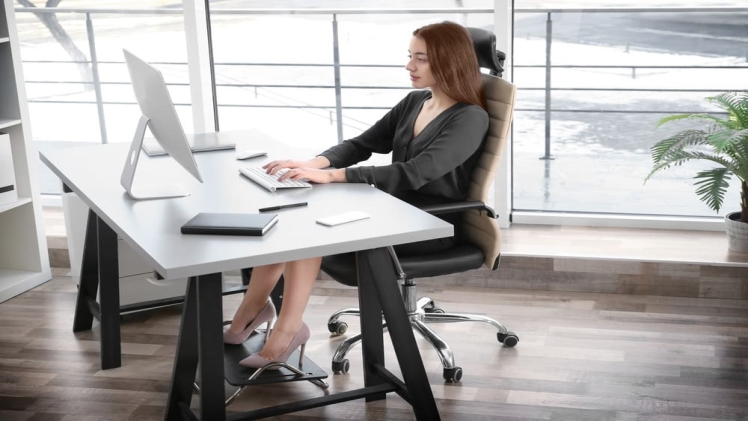
In our daily lives, the way we sit significantly affects our spinal health. Adjusting our sitting posture can be the key to alleviating back pain and promoting a healthier back. Ever heard of the program Unlock Your Spine? It’s a comprehensive system developed by Tonya Fines, focusing on a holistic approach to healing back pain through strengthening, stretching, and mindfulness. Now, let’s dive into some practical ways you can adjust your sitting posture for a healthier back.
1. Maintain a Straight Back
Sit all the way back in your chair with a straight back. Ensure your back is aligned with the back of the office chair. This will help you avoid slouching, which can strain the spine.
2. Keep Feet Flat on the Floor
Keeping your feet flat on the floor maintains balance and stability. This position supports the lower back and reduces the risk of developing pain. Avoid crossing your legs, as this can lead to posture imbalances.
3. Adjust Chair Height
Ensure that your chair is the right height. Your knees should be at hip level, forming a 90-degree angle. If they are not, adjust the chair’s height or use a footrest.
4. Use Lumbar Support
A lumbar support pillow can be a game-changer. It encourages the natural curve of the spine and helps to alleviate lower back pressure. If you don’t have one, a rolled-up towel will do the trick.
5. Take Regular Breaks
Don’t forget the importance of moving around. A study discussed in this article highlights the significance of taking breaks to alleviate pain and stiffness. Stand, stretch, or walk around every 30 minutes.
6. Keep Screen at Eye Level
Position your screen so that the top is at or slightly below eye level. This will help maintain a neutral position for your neck and reduce the risk of strain.
7. Mind Your Keyboard and Mouse Placement
Ensure that your keyboard and mouse are close enough so you can use them comfortably with your lower arms parallel to the floor or slightly declined.
8. Practice Mindfulness and Breathing
Integrating mindfulness and focused breathing can significantly influence your posture and overall back health. Being aware of your posture and practicing deep breathing helps in reducing tension and stress on the back.
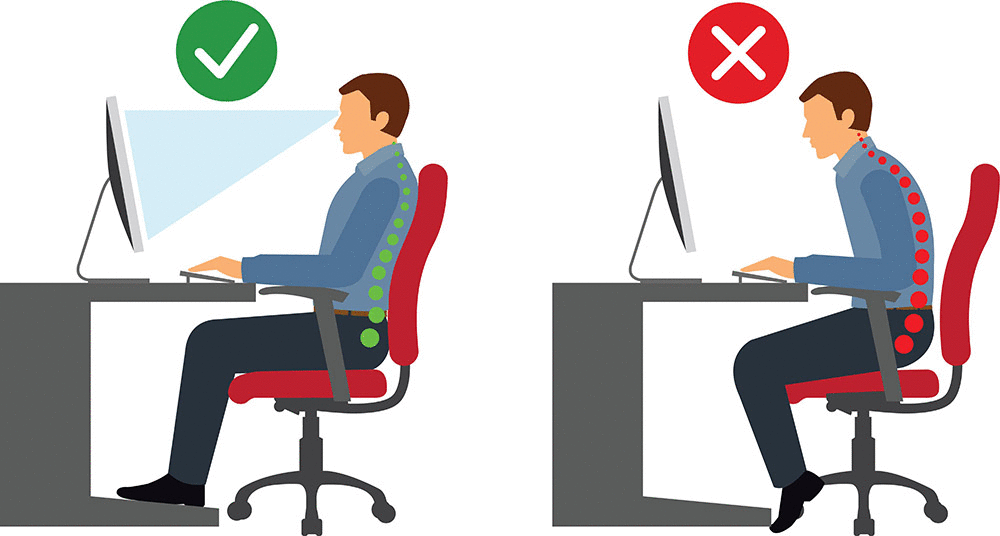
In conclusion, these straightforward adjustments can make a huge difference in promoting a healthier back and reducing discomfort. By incorporating these tips along with mindful living, you’ll be well on your way to a pain-free back. And for those looking to expand their horizons beyond health, exploring how to make money as a couple without stressing your relationship can offer financial wellbeing alongside physical health. Stay healthy, stay informed!
Strengthening Core Muscles
One of the fundamental ways to improve posture and ensure a healthier back is by strengthening your core muscles. These muscles are pivotal in supporting your lower spine. Incorporating exercises like planks, leg raises, and abdominal crunches into your daily routine can strengthen your core, enhancing your overall posture and reducing the risk of back pain.
The Impact of Nutrition and Hydration
What we consume also plays a vital role in spinal health. Staying well-hydrated is essential as it impacts the elasticity and fluidity of the spinal discs, mitigating the risks of disc-related issues. Incorporating foods rich in calcium, vitamin D, and anti-inflammatory properties, like fruits, vegetables, and lean proteins, contribute to healthier bones and muscles, supporting your back effectively.
Ergonomics and Workspace Optimization
Creating an ergonomic workspace is just as crucial as adjusting your sitting posture. An ergonomically optimized workspace involves the proper arrangement of your desk, chair, computer, and other elements to minimize strain on your body. This means having a chair with adequate lumbar support, a desk at the right height, and ensuring that all frequently used items are within easy reach. This arrangement not only aids in maintaining a good posture but also reduces the risk of developing musculoskeletal disorders.
