

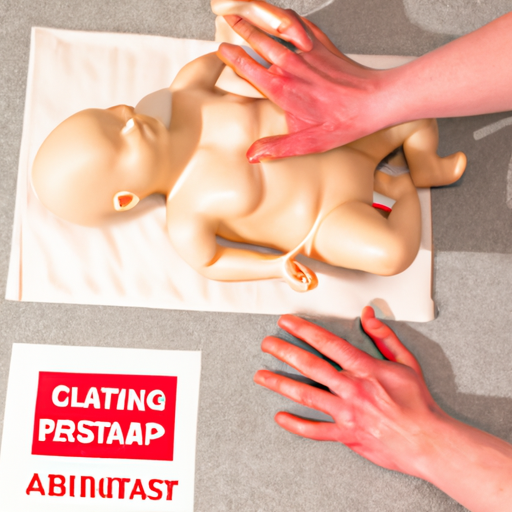
Cardiopulmonary resuscitation (CPR) is a life-saving skill that everyone should learn. It is especially important to know the correct technique for providing CPR to an infant under 12 months old. This article discusses the basics of infant CPR and the proper technique for providing it.
Infant CPR Basics
CPR is a combination of chest compressions and rescue breaths that is used to restore circulation and breathing in someone whose heart has stopped. When providing CPR to an infant, it is important to remember that the procedure will be slightly different than for an older child or adult. Infants have smaller bodies, so the technique for providing CPR must be adapted to their size. Additionally, infants may not require rescue breaths, as their hearts can be restarted with chest compressions alone.
Proper Technique for Infants
The American Heart Association recommends the following technique for providing CPR to an infant under 12 months old:
- Place the infant on a firm surface, such as a bed or the floor.
- Position your hands in the center of the infant’s chest and press down firmly.
- Compress the chest 1.5 to 2 inches (4 to 5 cm).
- Compress the chest at a rate of at least 100 compressions per minute.
- If you are trained in CPR, administer rescue breaths at a rate of one breath every three seconds.
It is important to note that, while CPR can be a lifesaving skill, it should only be used as a last resort. In the event of an emergency, it is always best to call 911 first.
CPR can be a lifesaving skill for infants in emergency situations. Knowing the proper technique for providing CPR to an infant under 12 months old is essential for ensuring that the infant receives the best care possible.
Providing CPR (cardiopulmonary resuscitation) to an infant under 12 months old can be a daunting task for many caregivers. Knowing the correct technique for CPR and implementing it quickly can help to save a child’s life in the event of cardiac arrest.
In an infant under 12 months old, providing CPR is slightly different than for an older child or adult. Since babies’ chests are usually too small for the force used for an adult’s CPR, the technique for infants requires gentle compressing of the chest at a rate of 30 compressions per 30 seconds. Compressions should be applied at a depth of two to two and a half centimeters, or as deep as the baby’s chest, with two or three fingers or a thumb encircling the edge of the baby’s chest.
When providing CPR, it is not essential to use the airway-breathing protocols that are recommended for adults and children. Instead, the emphasis should be on chest compressions, pumping the chest 100–120 times per minute in a twofold approach: two to two and a half centimeters for compressions, interrupted briefly for rescuer intervention. During these pauses, the infant’s head should be turned with the chin and jaw lifted to open the airway. The baby’s mouth should be cleared of any debris that may be blocking the airway.
If the infant is not responding and there is no help available, one breath should be given after each 30 chest compressions. In any case, continuous chest compressions should start immediately and should not be interrupted for more than 10–12 seconds at a time.
The goal of providing CPR is to ensure that adequate circulation and breathing are maintained until medical help can arrive. The sooner CPR is started, the better the chances of a successful outcome. All caregivers should be aware of the proper technique in administering CPR as it is a critical factor in saving an infant’s life.
