

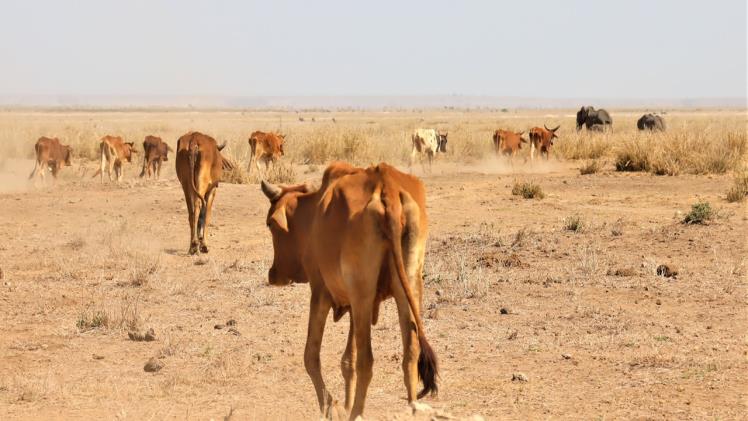
Climate change is one of the most pressing environmental issues of our time, and its effects are increasingly being felt across the world. In South Africa, climate change has been linked to an increase in the frequency and severity of droughts. In this article, we will examine the relationship between climate change and the regularity of droughts in South Africa.
Climate Change and South African Droughts
Climate change is defined as a long-term change in the average weather patterns that have come to define Earth’s climate. The main driver of climate change is the burning of fossil fuels, which produces greenhouse gases that trap heat in the atmosphere. This trapped heat leads to changes in global temperatures, precipitation levels, and weather patterns.
In South Africa, climate change has been linked to an increase in the frequency and severity of droughts. South Africa has seen a significant shift in its seasonal climate, with more frequent and intense droughts occurring in recent years. This has had a significant impact on the country’s agricultural sector, as well as its water resources.
Examining the Relationship
The relationship between climate change and droughts in South Africa is complex and not fully understood. However, there are some factors that are thought to contribute to the increased frequency and severity of droughts in the country.
One of the main contributing factors is the changing nature of the El Niño Southern Oscillation (ENSO). ENSO is an ocean-atmosphere phenomenon that can cause extreme weather events, such as droughts, in the regions it affects. In South Africa, ENSO is thought to be a major factor in the increased frequency and intensity of droughts.
Another contributing factor is the changing nature of the Indian Ocean Dipole (IOD). The IOD is a climate phenomenon that can cause shifts in the direction of the wind and the amount of precipitation in the region. This can lead to increased drought intensity in South Africa.
Finally, climate change has been linked to an increase in temperature in South Africa, which can lead to an increase in evaporation and a decrease in soil moisture. This can lead to drier conditions and an increased risk of droughts in the region.
In conclusion, the relationship between climate change and the regularity of droughts in South Africa is complex and not fully understood. However, there are some factors that are thought to contribute to the increased frequency and severity of droughts in the country, such as changes in
