

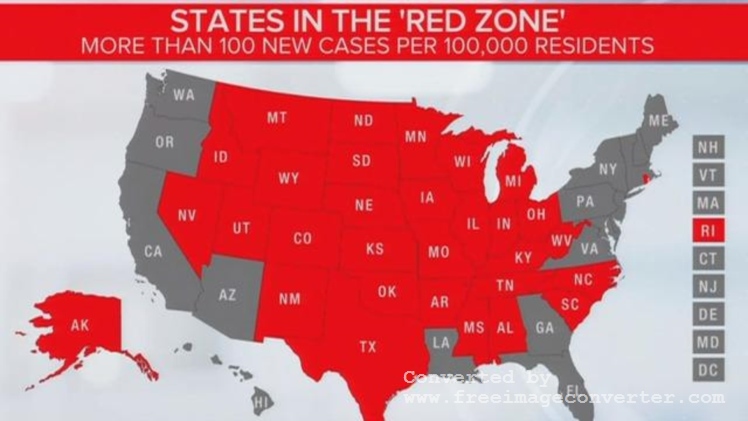
The spread of the novel coronavirus (COVID-19) has been a major challenge for nations across the world. In the United States, the Centers for Disease Control and Prevention (CDC) has established a color-coded system to track the spread of the virus. Red is the highest level of risk, indicating a very high number of cases and a high risk of transmission. Here, we look at the states that are currently in the red zone for COVID-19.
COVID-19 Red Zone States
The CDC has identified seven states as being in the red zone for COVID-19. These states include Alaska, Arizona, Florida, Idaho, Montana, Texas, and Utah. Each of these states has reported a high number of cases and a high risk of transmission.
States in the Red Zone Today
Alaska is currently in the red zone for COVID-19, with 1,837 cases reported as of August 20th. Arizona is also in the red zone, with over 190,000 cases and more than 3,800 deaths reported.
Florida has seen a surge in COVID-19 cases in recent weeks and has been in the red zone since June. As of August 20th, the state has reported over 500,000 cases and over 7,400 deaths.
Idaho is another state in the red zone, with over 22,000 cases and nearly 300 deaths reported as of August 20th. Montana has seen a recent surge in cases and has been in the red zone since July. As of August 20th, the state has reported over 8,400 cases and over 170 deaths.
Texas is another state in the red zone, with over 590,000 cases and over 11,600 deaths reported as of August 20th. Utah has seen a recent surge in cases and has been in the red zone since July. As of August 20th, the state has reported over 40,000 cases and over 350 deaths.
As of August 20th, seven states are in the red zone for COVID-19. These states include Alaska, Arizona, Florida, Idaho, Montana, Texas, and Utah. Each of these states has reported a high number of cases and a high risk of transmission. It is important to continue to practice social distancing and other safety measures to help stop the spread of the virus.
As the Coronavirus pandemic continues to spread at an alarming rate throughout the world, it is important to stay informed about the local state of affairs regarding the infection. As of today, numerous states have been placed in the “red zone” for Covid-19, meaning that the number of infections has surpassed or is nearing the threshold for the highest risk of community spread.
The list of states that are currently in the red zone include Mississippi, Alabama, Arkansas, Wyoming, South Dakota, Oklahoma, Iowa, Northern Mariana Islands, Idaho, Montana, and Wisconsin. The states of California, Arizona, and Texas have recently been removed from the list as their numbers have decreased. While these states have made some headway, they are not completely out of the red zone yet and still need to remain vigilant in their efforts to contain the virus.
In addition to the states mentioned above, several other states and territories are considered to be in the red zone such as North Dakota, U.S. Virgin Islands, Louisiana, Nevada, South Carolina, Kansas, and Illinois. All of these locations have been facing increased numbers of Covid-19 cases and should employ urgent efforts to control the spread of the virus.
The Centers for Disease Control and Prevention (CDC) have released specific guidelines and recommendations for states that are in the red zone. This includes measures such as rapidly expanding testing and contact tracing; limiting large gatherings and encouraging the use of face masks; increasing the availability of PPE for healthcare workers and other essential personnel; and the implementation of travel advisories, among others.
Each state and territory in the red zone must heeding the advice of their local health officials and the CDC, and take all necessary steps to avoid the spread of Coronavirus. By staying informed, safe, and responsible, we can all help to contain this pandemic and move closer to achieving long-term recovery.
